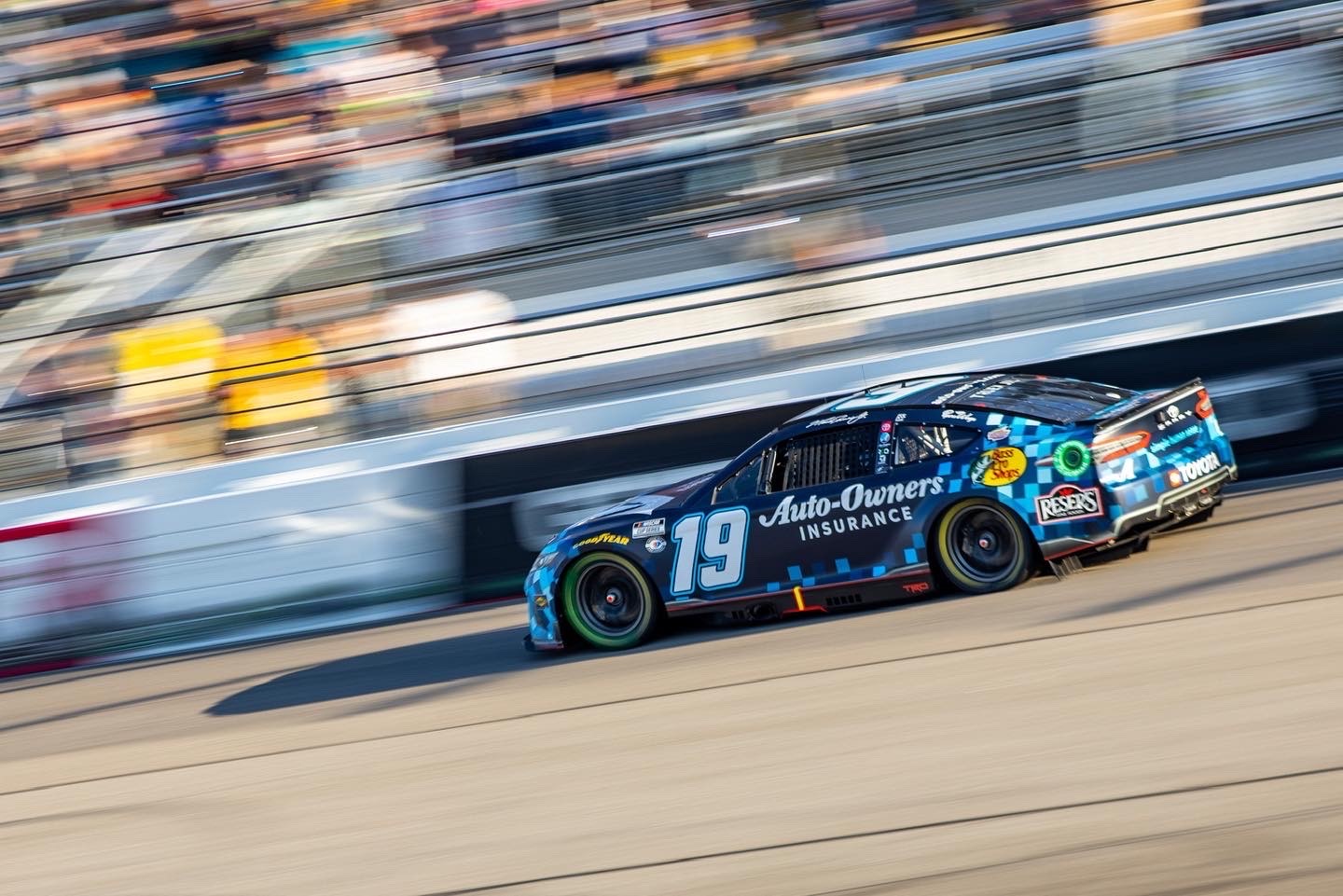
With three NASCAR Cup Series races on the reconfigured Atlanta Motor Speedway, the new Atlanta really isn’t all that new anymore. How would you describe the current track? “It’s just a superspeedway race on a mile-and-a-half racetrack. Things just happen a lot faster, so the decisions have to happen faster, the cars move around a lot more, the corners come up a lot quicker. A lot more seat-of-your-pants, just, ‘Go here, go there, do this, do that.’” What are your expectations for your return to Atlanta this weekend? “From a driver’s perspective, you hope that the track loses a tremendous amount of grip in a really short amount of time. For me, personally, Atlanta was the racetrack that I always looked forward to every year because of the surface. I understand the surface was at a point where it was a lot of work and needed some change. I’m not sure that everybody wants to run more superspeedway races, but I think it’s exciting and very unique with the mile-and-a-half configuration and things happening so fast. I think everybody’s hoping for a tremendous grip loss in a really short amount of time.” The first of your 60 career NASCAR Cup Series wins came at Atlanta 22 years ago. How did that race weekend unfold for you? “We went in and, really for the whole weekend, we were competitive throughout each practice. Atlanta is always one of those places where you just want to keep yourself on the lead lap, and as the race went on, we wound up in a position there at the end of the race where it was myself, Jerry Nadeau, Dale Jr., Jeff Gordon and I believe fifth place was Dale Jarrett. And we just had a heck of a race for the last 25 laps and I think I took the lead three-wide down the front straightaway, which was probably like taboo at the time – racing etiquette was much different. I took the lead and Jeff Gordon had, by far, the fastest car on that particular day, but he somehow wound up a lap down and had to come from the back of the field. I don’t remember much about that particular day other than mixing it up like that, and the only reason I remember is because I’ve seen it so many times. Really, the only things that I remember about that particular day, because there was so much going on in life, in general, at that particular point, you didn’t know whether to be happy or sad. I just got married and there were so many things happening that you were emotionally confused. For me, the things that I remember were coming to the white flag, and the people on the backstretch had climbed up on the fence and I remember coming back the last lap and having to decide top or bottom, and I chose the top and wound up about losing the race because I underdrove the car. But that’s really the only thing that I remember other than, after my burnouts, it was the only race that I remember where the crowd was so loud that you could hear the people screaming and hollering over the engine of the car, and I think that was because everybody was just emotionally confused and people were screaming and they didn’t know whether they should scream because they were happy or sad. It was one of those moments that everybody didn’t expect to be in and there we were. I do remember driving around the track backward and just the people screaming and hollering and hanging on the fence.” How did that first win at Atlanta change your career? “Well, everybody kind of already knew your name at that particular point, and I always tell people that things happened backward in my career. They all knew my name first, and then you had to figure out how to earn who you were from that point forward, and then you had to walk everything back in order to be yourself. Everybody knew your name because of Dale’s passing and getting in his car, and then winning the race – that was kind of the moment that solidified the fact that you could do it. And at that point, you did it on the biggest stage because outside of Dale Jr., you had the biggest spotlight shining on you driving that particular car. It was a lot to deal with. Definitely wasn’t ready for all that. Obviously, it solidified the fact that you could drive the car, but dealing with all the things that came after that were difficult because I was 25 and we were just married, and driving home with people standing in your yard, cars parked on your street and everybody knowing where you live, and having to deal with all that was something that we weren’t really ready for.” Did you feel the magnitude of that win right away, or is it something that time has amplified? “You look back on it now and you realize the magnitude of all those guys walking out to pit road to congratulate you, and really they understood, or had a better sense of the situation, than I probably did. To get that kind of congratulations from a whole pit road of people is something that shows you the magnitude of the situation. When you look back on it now and you realize what that could have meant in the other direction for your career, it could’ve been catastrophic. But it really was something that, at that moment, kept RCR (Richard Childress Racing) going in the right direction and started to rebuild the process of what it was going to look like over the next decade. You look back on it now, and that was really the start of understanding what your career was going to look like for a while. Now, I look back on it and there are a lot of decisions that I could’ve made a lot better, but it was really a difficult situation that you didn’t even know you were in until you were way done with it.” You spent 14 years driving for Richard Childress. What does Richard Childress mean to you? “Richard and I have always had a great relationship because Richard is just a racer. From the very beginning, Richard has run his business by putting competitive cars on the racetrack, and he’s made a living at it. And when we started our company (Kevin Harvick Inc.), I mimicked a lot of the things that Richard did because of the fact that he ran it with a budget and was able to keep his cars competitive. Richard really taught me how to race professionally. He taught me to never quit until the checkered flag, even if you were 100 laps down. It was always about finishing races and putting yourself in the best position possible. You may not have the fastest car, but if you can keep yourself in contention to the end, you would be able to have a chance to win races just by kind of grinding them down. We did that a lot, and it’s really transitioned over from the business standpoint – that never-give-up attitude – and just really how to race. And Richard knows everybody, and that’s really who introduced me to everybody in the industry. He was always very adamant about shaking a hand, putting a name with a face, and being in front of people. So there were definitely a lot of lessons learned there.” You’re very interested in the business side of the sport. Did that stem from Richard Childress, too? “Every time I look back at things, Richard played a role in some way, shape or form. Richard was always very supportive, but he would always tell you when you were crossing the line and when he wasn’t happy with something. He always kept it honest, and I think as we went through the years, the business side was always very much centered on Richard knowing what was going on and how you should and shouldn’t do things. When it was right, he was supportive, and when it was wrong, he was honest and he would tell you, so you always knew where you stood.” Not many athletes announce their retirement and compete for an entire season. How is that going for you? “Well, we laid out a great plan and tried to cover really everything that we could possibly think of before the season started to really involve everybody and make sure that we tried to be respectful and pay tribute and enjoy each weekend with a different fan base and with a different group of people. There are just so many people that you affect along the way and create relationships with, and so many of those things need to be noticed. Sometimes it’s a handshake, sometimes it’s a picture, sometimes it’s a dinner, whatever it is, sometimes it’s driver intros, a paint scheme or a helmet. We’ve tried to pay respect as much as we can each week to something or somebody or a situation or a moment because, in the end, you’re trying to tell a story for the last 30 years. And let’s face it, half of our fans weren’t here 10 or 15 years ago, let alone 30 years ago, so you’re trying to tell a story of my career and things that have happened, but in the end, behind the scenes there’s a lot that happens. And the thing that I’ve learned, and Tony (Stewart) and everybody at SHR has done a great job in making me realize, is there’s a lot more to it than retiring and saying that you’re done. There are a lot of people who want to be part of it, and there are proper ways to celebrate it and still be competitive. And the thing that sticks out to me is we’ve been competitive every week and had a chance to win a couple of races and run at the front and lead laps and do the things that I’ve wanted to do, and that was to be competitive for my team. I think that’s the most important part, going out on your own terms the last year and try to do what we’ve done the last 22 years on the Cup side and that’s be competitive, and I think that’s the most respectful thing to the fans and the people and the sport, to not just go out there and cash it in but to go out there and to try to win.” |